Microsoft started rolling out Windows 11 on October 5 and the users have started to report bugs in the new operating system. According to a Reddit thread, the update is suffering from memory leak issues as caused by a bug in File Explorer. When the computer is allocating too much RAM for a program and then doesn't release the unused cache memory, it is referred to as memory leak. The bug was first spotted by Reddit user Gyrohan269 two months ago on a beta version of Windows 11. Now that post is getting attention slowly as other users who are facing similar issues after installing the new operating system are sharing their experiences.
However, I need to address the elephant in the room here - I guess the main reason why people would dislike Windows 11 is... This build introduces a "Taskbar settings" page, which lets you hide and unhide icons on the taskbar. While a lot of users got their hands on the beta version of Windows 11, Microsoft has officially launched the Windows 11 operating system for users around the world. Systems that are running on a licensed version of Windows 10 and meet the minimal hardware requirements can upgrade to the new operating system by Microsoft for free. However, some users who have downloaded and installed the Windows 11 update are reporting a bug.
I was digging the novelty during the first week, but after a while, a few aspects of Windows 11 bugged me — literally. At one point, during the first week of September, all my icons on the taskbar disappeared and some apps failed to load. As an Insider, you agree to accept the risks that come with being Microsoft's guinea pig, but nothing prepares you for that harrowing moment when you realize you may lose everything on your PC. As it turned out, countless other Insiders flocked to Reddit to report the same issue. Microsoft revealed that the culprit was a faulty server-side deployment of a Windows 11 beta update. It later released a do-it-yourself fix that involved typing a code into Command Prompt.

This doesn't happen in Windows 10, and it's been a problem since I first installed the preview. I've also just recently started having issues with my LG UltraFine 5K as well. It'll go black for a few seconds every minute or two, though Windows doesn't seem to register that it's dropped off. I get that it's a Thunderbolt display mostly made for Macs, but these issues haven't cropped up in Windows 10. Until they're gone from my test install, I'd really rather not upgrade to Windows 11 on my main partition. Other than those issues, though, it's been like using a prettier version of Windows 10.

The build includes a wide variety of security updates. For details, seeMicrosoft's Security Update Guide and the November 2021 Security Update notes. It also fixes a bug that causes improper rendering of some user interface elements or when drawing within some apps. And it makes quality improvements to the servicing stack, which is the component that installs Windows updates.

File Explorer is a good example of Windows 11's new look, particularly its updated left panel controls and folder icons. Note the simplified ribbon along the top, which is far less busy and distracting than the previous File Explorer's. The New button at the top left works for new folders or documents supported by your apps, and the same viewing options for files are available. The overflow menu offers file compression, selection, and Properties options, as well as the old Folder Options dialog. The right-click context menus, which have grown longer and longer over the years, get shorter, smarter, and clearer in Windows 11.

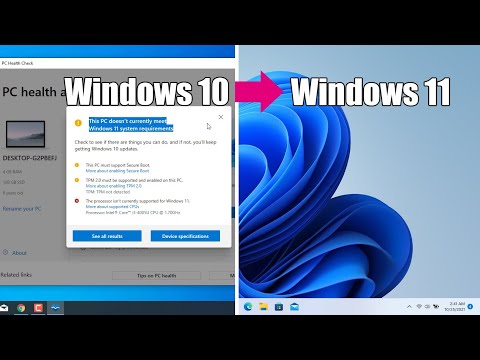
Anyone with one of the newer chips should have no trouble installing Windows 11 via Windows Update. Microsoft made a downloadable ISO disk image file for the beta Insider version available for installing Windows 11, allowing in-place upgrades or clean installations on a PC or in a virtual machine. A similar installation option is now available for the release version of Windows 11 via the Microsoft's Download Windows 11 page.
Some sources have reported that installing the OS with the ISO installer bypasses the system's hardware requirements, but that's not advisable as you may not get future OS updates if you install it on unsupported hardware. Windows 11 has got its first beta for members of the Windows Insider Program. The new OS from Microsoft was announced last month after which the developer preview was released. Microsoft says this beta build is part of the beta cannel and it brings a host of features and improvements to the OS.

While it is more stable than the previous developer preview, it still has several bugs so keep that in mind if you plan on using it on your primary PC. Microsoft slipped a ton of cool features into its latest Windows 11 Insider release, including a Task Bar button that toggles your microphone. But users on the r/Windows11 subreddit report that the new Dev build has some strange bugs—including enormous Task Bar app icons. With this build you can mute and unmute your microphone from the taskbar during a Microsoft Teams call. In addition, a wide variety of bugs have been fixed, including one in which context menus crashed when you tried to scroll through them, and another in which some devices had a black screen when coming out of sleep. This build lets you quickly share content from open app windows directly from your taskbar to your Teams meeting calls.
In addition, a wide variety of bugs have been fixed, including one in which Clipboard history wasn't working properly, and another in which explorer.exe crashed when using the touch keyboard. Windows 11 has been released, but behind the scenes, Microsoft is constantly working to improve the newest version of Windows. The company frequently rolls out public preview builds to members of its Windows Insider Program, allowing them to test out — and even help shape — upcoming features. Windows 11, unfortunately, ditches a couple of its best tablet- and touch-friendly features. Most importantly, you can no longer swipe in from the left to open the task-switching view, a gesture I use all the time on my Surface Go tablet. You can no longer swipe down from the top to close an app, either.
This omission is less of a big deal because you can still hit the X in the window's upper right corner as you'd do in desktop mode. Again, though, for a handheld device, the down-swipe is more direct and requires less dexterity. There are, however, new three-finger swipe gestures to show the Task View and to minimize and app on the desktop. A sideways three-finger swipe switches you between running apps.

And you can, of course, use the Task View button in the Taskbar, but that's not as immediate as a swipe of the thumb. I'd argue that switching tasks is more important to tablet users than accessing Widgets, the new result of that gesture, too. Windows 11 has a new Widget panel, which shows you tiles for news, weather, stock quotes, sports scores, and more. It's not entirely new since the News and Interests Taskbar popup that arrived in Windows 10 recently is exceedingly similar.

I've gotten used to having the News and Interests weather indicator always in the Taskbar in Windows 10, and thankfully a Windows Insider preview build shows that Microsoft is considering bringing back this useful taskbar button. To see the same info in Windows 11, you have to click on the Widgets icon in the Taskbar. In addition to Microsoft-produced first-party tiles, third-party developers can offer content through Windows 11's widgets, too. Touch screen users can easily swipe in from the left to open them and you can full-screen the widget panel if you want a bigger view.

Microsoft did indicate that users of Exchange Server 2013 and newer will be able to perform "in-place" upgrades to Exchange Server vNext. Exchange Server 2019 users, in particular, will have a two-year window in which they can upgrade to Exchange Server vNext. "Once the next version of Exchange is released, they will then be able to perform an in-place upgrade to that version, making the move to 2019 the last major upgrade they will ever need to do."

Now that Microsoft's new operating system is out, it might be time to grab Windows 11 download and get it installed. Just be warned, there are always a few kinks with any software launch so it might be wise to hold off on installing Windows 11 for a short while if you don't want to deal with those. Although, early bugs and issues should be taken care of relatively quickly if you do want to upgrade now. You just have to know how to fix common Windows 11 problems.

Minor complaints aside, we like to see Microsoft giving its marquee software some attention. For the last few years, the company has focused more on its Azure cloud computing services—justifiably given that business's profitability. Windows 11 brings slick new looks, useful new tools, updated default apps, extra capabilities, and performance advances. Perhaps that's enough to lure away some Chrome OS users or Mac users.
Regardless, it's still early days for the desktop OS that's used on 1.3 billion PCs, so we look forward to Microsoft fine-tuning and perfecting Windows 11's design in future updates. I've been very tempted to upgrade to Windows 11 Dev beta on my main pc because I have been reading other posts that it's very stable, even so, more stable than Windows 10 itself. My PC is a custom build, with an RTX 3070 and I k ; I've heard there were some issues with windows 11 and custom build PCs, so I'm quite reluctant to upgrade, and I mostly play games and online class using google chrome. This build introduces a new family widget for MSA accounts (a single sign-on Microsoft account). It lets people see recent activity of members of their Microsoft family group.

This build brings the snap groups feature to Alt-Tab and Task View, allowing you to easily choose from a number of pre-set ways to automatically arrange your open windows. The build also squashes a wide variety of bugs, including the battery icon tooltip unexpectedly showing a percent above 100, and Settings content getting truncated when the Settings window is made small. The Dev Channel is where new features are introduced for initial testing, regardless of which Windows release they'll eventually end up in. This channel is best for technical users and developers and builds in it may be unstable and buggy. One of the more irksome things about Windows 10 is its inconsistent settings windows and dialogs. Sometimes you uninstall a program in the new Settings app, sometimes in the antiquated Control Panel.
That inconsistency goes away in Windows 11—almost entirely. For some detailed controls, such as sound devices, you still see the content in the old style, though the window uses the new design. Comments- i wouldn't call this a perfectly good operating system because it doesn't cater to all users expecially windows 10, and has a lot of features from there missing. I installed it a however many weeks ago and haven't really had problems. I have a few gripes with minor missing features, no clock on secondary monitor and the new context menu is so far unsupported by most third-party apps, but nothing deal breaking.

I like the new design, better organised settings menu, smoother animations, etc. There's also the new copy/paste/delete menu which has turned into icons without text, making it difficult to identify them as quickly as before. Insiders have noticed a few show-stopping bugs with Windows 11, which is now officially available for all eligible PCs. Users have noticed that virtualization-based security, which will be enabled by default in all OEM PCs, can have a drastic impact on frame rates in games. Also being observed is a File Explorer memory leak bug in which closing the Explorer windows does not release back the allocated memory.
I haven't really seen any other striking updates that have added any benefit to my workflow — and I do have some suggestions. It'd be nice to get a Sticky Notes upgrade, allowing users to merge notes into organized groups. I'd also love it if Microsoft could make searched files "draggable" so that they can be easily dropped into Gmail, Slack and other apps. Overall, I can't in good conscience say that Windows 11 has enhanced my productivity. I'd even go as far as saying that it has negatively affected my workflow.
Windows 11 is once again being causing some issues for users, this time with numerous reports of slower performance of NVMe SSDs using the operating system. The reports can be found on multiple Reddit threads, as well as on Microsoft's support forums , and they're actually not new. Reports on this problem go back a few months, when Windows 11 is still in preview, but the complaints persist two months after launch.

Additionally, there are several minor changes in the build, including notifications now having acrylic backgrounds. There are also many bug fixes, including for one that caused the font in the taskbar previews to incorrect and another that crashed explorer.exe when using Alt-Tab. For example, Windows 11 has new Contrast themes, redesigned closed caption themes, and AI-powered Windows Voice Typing. The new OS also adds APIs for programming assistive apps, and even the Windows Subsystem for Linux now has accessibility options. In addition to apps you can get in the Store, you also get all the standard apps like Photos , the FLAC-capable Groove Music player, Voice Recorder, two Paint apps , Mail, Calendar, and so on.

We can hope for the last two mentioned to be greatly improved as Windows 11 development progresses. In the initial release, we still have the existing apps, albeit with rounded corners, but new versions will be based on the excellent Progressive Web App versions of Outlook.com. Microsoft has already teased an updated Paint app (though I've started to enjoy the modern Paint 3D), as well as new versions of Notepad (with a dark mode!) and the Calculator.

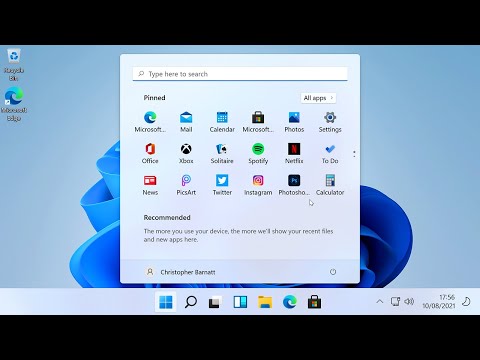
The Start menu gets a major overhaul in Windows 11. Pinned app buttons (they're larger than icons but smaller than Windows 10's tiles) are at the top of its panel. Recent and frequent apps and documents are in a section below them.

The Start menu's new mini-tiles are still good for touch input, but you lose info that live tiles offer, annoying as those could sometimes be. Another quibble I have with the new Start menu is that it's harder to get to the All Apps view than in Windows 10. With that version of Windows, you can see all installed apps as soon as you open the Start menu; they're in a list on the left while tiles for your pinned apps are on the right.
I'm planning on doing a clean windows install on a new SSD I ordered recently, and I have been debating on just clean installing windows 11, but does it seem "ready enough" yet for a daily driver? Some I have asked say it's okay, others are weirdly vehemently against it but I'm suspecting that it could be just information based on old issues that have been resolved already. I also do regular backups (haven't had to use them yet).

Sometimes, things break enough to where I can't fully use everything for a week or two. I fully expect it to at some point, and have zero expectation of a stable, reliable Windows experience. That's kind of the nature of the beast with the Insider builds. They are not the final product, there will be bugs, there will be problems, there will be stability issues. You do have a chance of losing all of your data and having to do a complete re-install.
L3 cache is one of three specialized memory caches working together to improve computing performance and ensure multi-core processors have access to adequate and timely data and instruction. Microsoft and AMD acknowledged the initial L3 caching problem shortly after the first Insider Preview build was released. The issue increases L3 cache latency across all supported AMD Ryzen processors resulting in a 10- to 20-percent drop in frames per second.
Microsoft added insult to injury during last Patch Tuesday's release. The Windows 11 update patch designed to resolve issues in the new operating system instead further hampered the already degraded performance experienced by many AMD users. Fortunately, a recent announcement by the Insider Program Team indicates that relief is in sight. You cancheck out our Windows Insider Program documentation here, including a list of all the new features and updates released in builds so far. These builds are from the earliest stage in a new development cycle with the latest work-in-progress code from our engineers. These aren't always stable builds, and sometimes you will see issues that block key activities or require workarounds while flighting in the Dev Channel.


